

Pena Palace history: from monastery to royal palace
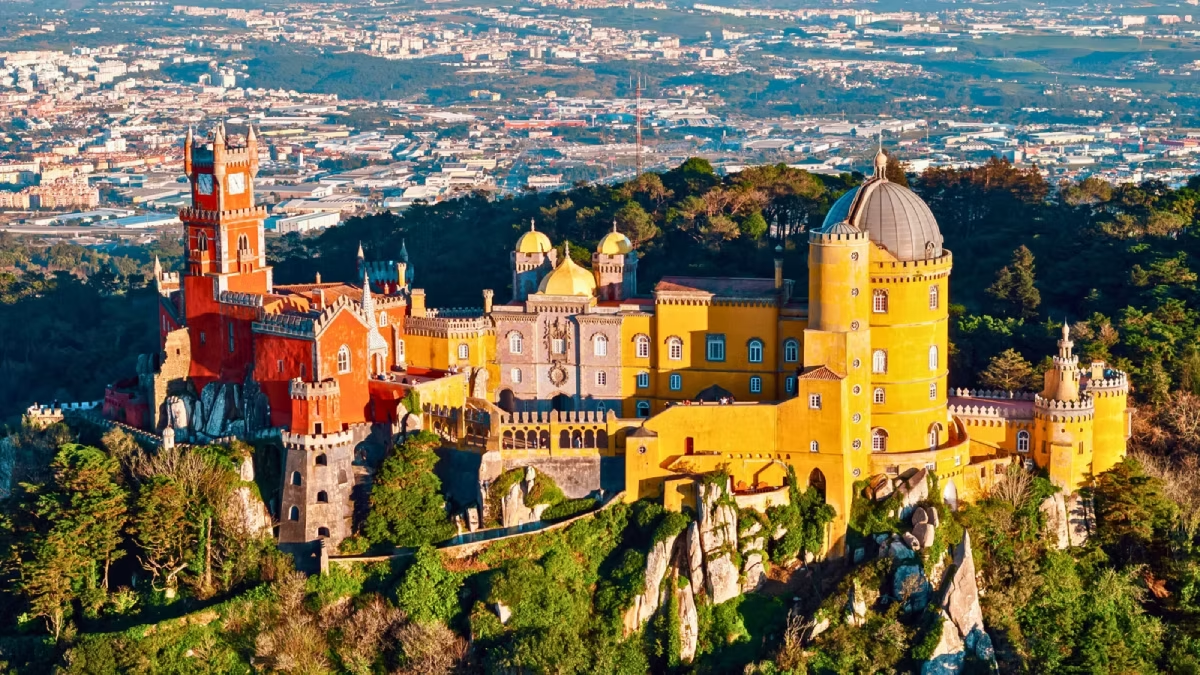
Pena Palace stands on the site of a medieval chapel and a 16th-century Hieronymite monastery, badly damaged in the 1755 Lisbon earthquake. King Ferdinand II bought the ruins in 1838 and built the Romantic palace seen today, largely complete by 1854, with architect Baron von Eschwege. It became a museum after the monarchy fell in 1910, and in 1995 joined UNESCO’s Cultural Landscape of Sintra.
Pena Palace’s colourful towers and turrets look almost invented, like a Romantic painter’s fantasy of a castle rather than a real building with a real history. In fact its story runs from a small medieval chapel, through nearly three centuries as a monastery, to a ruin left by an earthquake, and finally to the eclectic royal palace that gives Sintra its most recognisable landmark. Understanding that history changes how you see the building as you walk through it.
This guide sets out Pena Palace’s history in full — the monastery that came before it, the king who rebuilt it, the styles he mixed together, and how it became the museum you can visit today.
The Medieval Chapel and the Monastery of Our Lady of Pena
Long before any palace stood here, a small chapel dedicated to Our Lady of Pena occupied this hilltop, built after reported apparitions of the Virgin Mary. In 1503, King Manuel I ordered the construction of a proper monastery on the site, and handed it to the Hieronymite order (the Order of Saint Jerome) — the same order behind the famous Jerónimos Monastery in Lisbon. Pena’s monastery, however, remained a modest one; records suggest it never housed more than a small community of monks at any point across nearly three centuries of occupation.
The 1755 Earthquake and the Monastery’s Decline
The Great Lisbon Earthquake of 1755, one of the most destructive in European history, reached into the Sintra hills and left the monastery in ruins, though its chapel — with an alabaster-and-marble altarpiece attributed to Nicolau Chanterène — survived comparatively intact. The monastic community struggled on for decades afterwards, but numbers dwindled, and in 1834, when Portugal’s liberal government dissolved the religious orders, the site was abandoned outright. For several years it sat as a picturesque ruin on the hilltop above Sintra, exactly the kind of overgrown romantic wreck that appealed to 19th-century sensibilities.
King Ferdinand II and the Building of the Romantic Palace
That appeal wasn’t lost on Ferdinand II, the German-born consort of Queen Maria II, who bought the ruined monastery and surrounding land in 1838. Rather than simply restoring it, he set about building an entirely new palace around and above the old structure, working with the German architect and military engineer Baron Wilhelm Ludwig von Eschwege. Construction proceeded through the 1840s, and the palace was largely complete by 1854, when Ferdinand made it his primary residence. He continued shaping the wider estate for years afterwards, later building the Chalet of the Countess of Edla in the park with his second wife.
The Eclectic Architecture and the Palace’s Colours
Pena Palace mixes Neo-Manueline, Neo-Gothic, Neo-Moorish and Neo-Renaissance elements in a single building, a deliberately eclectic style typical of 19th-century Romanticism. Its most famous feature is its vivid red and yellow façades, along with details like the Triton portal at the entrance, an allegorical carving representing the creation of the world. The result looks unlike any other palace in Portugal, and was designed that way on purpose.
Ferdinand II and von Eschwege borrowed freely from the architectural vocabulary of Portugal’s past and further afield — pointed Gothic arches, twisted Manueline stonework reminiscent of the Age of Discoveries, Moorish-influenced domes and tilework, all wrapped around the surviving monastery cloister. Nothing about the palace pretends to be historically consistent, and that’s precisely the Romantic point: it was built as an idealised, theatrical version of history rather than a faithful restoration. The bold colouring of the walls, restored to its striking red and yellow in recent decades, reinforces the fairy-tale effect that makes Pena Palace instantly recognisable from the terraces below and across the park.
From Royal Residence to National Museum
Ferdinand II lived at Pena until his death in 1885, and later monarchs, including King Carlos I and Queen Amélia, used it as a summer residence into the early 20th century. That royal chapter ended abruptly in 1910, when the monarchy was overthrown and Portugal became a republic. The palace was classified as a national monument that same year and opened to the public as a museum, its rooms preserved largely as the royal family left them — a detail that still shapes what you see in the state rooms today.
UNESCO World Heritage Listing
In 1995, Pena Palace’s setting was formally recognised on the world stage when Sintra’s wider landscape — its palaces, gardens and hills, including Pena and the nearby Moorish Castle — was inscribed by UNESCO as the Cultural Landscape of Sintra. The listing acknowledged not just individual buildings but the whole Romantic ensemble of palaces and parkland that 19th-century figures like Ferdinand II helped create, cementing Sintra’s reputation as one of Europe’s earliest examples of a designed Romantic landscape.
Frequently Asked Questions
What was on the site before Pena Palace was built?
A small medieval chapel dedicated to Our Lady of Pena stood here first, followed in 1503 by a proper Hieronymite monastery ordered by King Manuel I. The monastery was badly damaged in the 1755 Lisbon earthquake and finally abandoned in 1834, leaving a picturesque ruin that Ferdinand II later bought.
When was Pena Palace built?
Ferdinand II purchased the ruined monastery site in 1838, and construction of the new palace, led by architect Baron von Eschwege, ran through the 1840s, with the building largely complete by 1854. Ferdinand continued to develop the wider park and estate for years after that.
Who built Pena Palace?
King Ferdinand II commissioned it, working closely with the German architect Baron Wilhelm Ludwig von Eschwege. Ferdinand took a hands-on interest in the design, and the palace is generally considered one of the finest examples of 19th-century Romantic architecture in Europe.
Why is Pena Palace so colourful?
Its red and yellow façades were a deliberate design choice, part of the Romantic, fairy-tale character Ferdinand II wanted for the building. The colours have been restored over the years to recreate the vividness of the original scheme, making the palace visible from a considerable distance across the Sintra hills.
What architectural styles does Pena Palace combine?
It mixes Neo-Manueline, Neo-Gothic, Neo-Moorish and Neo-Renaissance elements in one eclectic composition, a hallmark of 19th-century Romanticism rather than any single historical style. The Triton portal at the entrance and the varied towers and turrets are good examples of this deliberate mixing.
Did the 1755 earthquake destroy the monastery?
It caused severe damage, reducing much of the monastery to ruins, though the chapel and its alabaster-and-marble altarpiece survived in comparatively good condition. The monastic community continued in reduced form for decades afterwards before the site was finally abandoned in 1834.
When did Pena Palace become a museum?
In 1910, following the fall of the Portuguese monarchy, the palace was classified as a national monument and opened to the public. Its rooms were kept much as the royal family had left them, which is why the interior still feels like a lived-in royal home rather than an empty museum.
Is Pena Palace a UNESCO World Heritage Site?
Yes, since 1995, as part of the wider Cultural Landscape of Sintra listing, which covers Pena Palace alongside other Romantic-era sites in the hills, including the Moorish Castle. The listing recognises the whole designed landscape rather than any single building in isolation.
