

Pena Palace interior: the state rooms explained
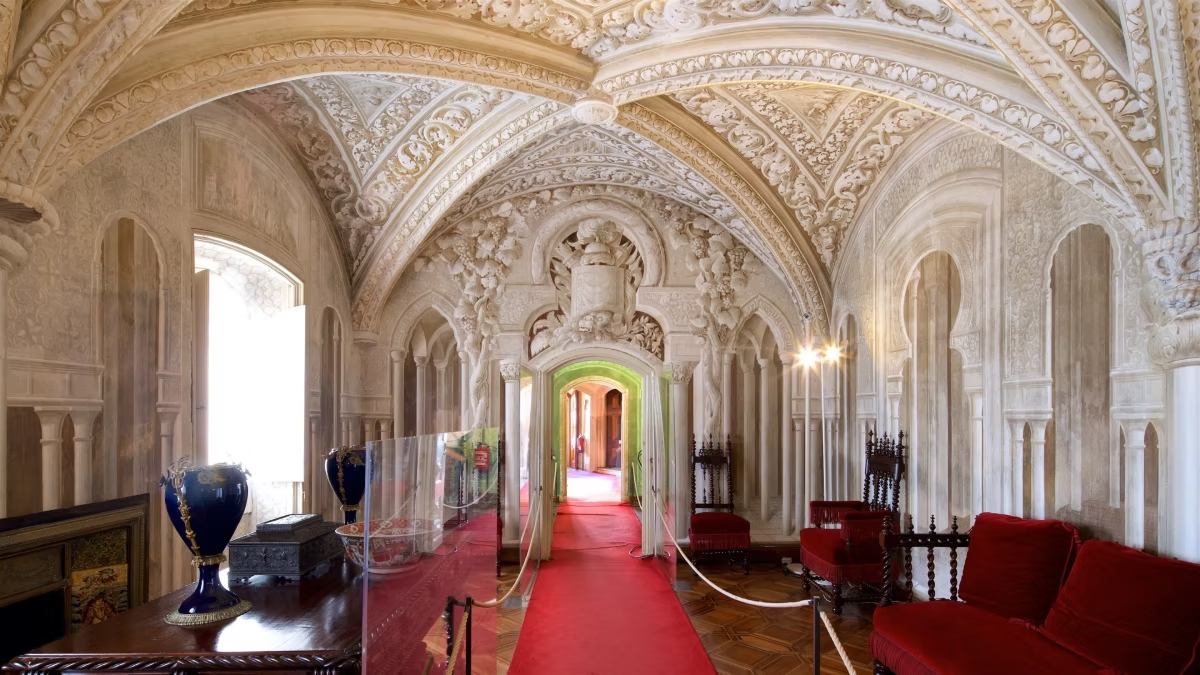
Pena Palace’s interior preserves the state rooms much as the last royal family left them in 1910, including the Great Hall, the trompe-l’œil Arab Room, the old monastery cloister and chapel, the kitchens and the private apartments of Queen Amélia and King Carlos. Entry to the interior is on a strictly enforced 30-minute timed slot, printed on your ticket, so you move through the rooms at a steady pace rather than lingering.
The exterior of Pena Palace gets most of the photographs, but the interior is where the building’s odd, layered history comes into focus. Walk through it and you’re moving through three different eras at once: the 16th-century Hieronymite monastery the palace was built over, the eclectic Romantic fantasy King Ferdinand II added on top of it in the 1840s, and the lived-in rooms of Portugal’s last monarchs, frozen at the moment the monarchy fell in 1910.
This guide walks through the interior route in the order most visitors experience it, room by room, so you know what you’re looking at and why the 30-minute slot matters.
What Does the Timed Slot Actually Cover?
Your 30-minute slot is for the palace interior only — the state rooms, cloister, chapel, kitchens and apartments described below. Once you’ve completed the interior route you’re free to spend as long as you like in the park and on the terraces until closing. The slot is strictly enforced, so build in time to reach the palace door before it begins.
Only the Park + Palace ticket includes interior access; a park-only ticket covers the grounds and the terraces and exterior but not the rooms below. If you’re deciding which to book, our comparison of the park-only vs park + palace ticket sets out the trade-offs. Because numbers inside are capped by slot, the rooms rarely feel overcrowded even at peak season, which is one of the interior’s underrated advantages over the terraces outside.
The Great Hall and Noble Rooms
The route typically opens in the palace’s grandest public space, generally known as the Great Hall (also called the Noble Hall), used by the royal family for formal occasions and state functions. Its scale and decoration — patterned floors, ornate stucco work and period furnishings — set the tone for the eclectic mix of styles you’ll see throughout the palace, where Neo-Gothic, Neo-Manueline and Moorish-influenced details sit side by side rather than following a single architectural language.
Adjoining rooms on this part of the route include smoking and sitting rooms used by the royal household, along with chambers linked to King Manuel II, the last king of Portugal, and to Ferdinand II himself. These rooms give a sense of how the palace functioned as a working royal residence rather than a purely ceremonial building, with everyday living spaces threaded between the grander halls.
The Arab Room and Its Trompe-l’Œil Walls
One of the interior’s most striking spaces is generally known as the Arab Room, decorated with Moorish-influenced motifs and elaborate trompe-l’œil painting — a technique that uses shading and perspective to make flat walls appear three-dimensional, mimicking carved stonework and depth that isn’t really there. It’s a good example of the palace’s broader approach: rather than importing genuine historic materials, Ferdinand II’s designers often painted the illusion of them, in keeping with the theatrical, fantasy-driven spirit of Romanticism.
Look closely at the wall surfaces here and in nearby corridors, and the layered, almost sculptural patterning reveals itself as paint rather than plasterwork. It’s one of the details visitors often miss when moving quickly through a timed slot, so it’s worth a slower look if your pace allows.
The Dining Room and the Old Monastery Core
The dining room occupies the former refectory of the Hieronymite monastery that stood on this site before Ferdinand II’s rebuilding — the dining hall where monks once took their meals. Its arched ceiling and simpler stone construction contrast with the more elaborate rooms elsewhere in the palace, a visible reminder that Pena was built over an existing religious building rather than raised entirely from scratch.
This part of the interior route is generally the clearest place to see where 16th-century monastery fabric ends and Ferdinand II’s 19th-century additions begin. For more on how the whole site evolved from ruined monastery to royal palace, see our guide to Pena Palace’s history.
The Cloister and Chapel
The monastery’s original cloister survives within the palace, a quiet arcaded courtyard that feels distinct from the ornate state rooms around it. Off the cloister sits the chapel, home to an alabaster-and-marble altarpiece generally attributed to the Portuguese Renaissance sculptor Nicolau Chanterène, dating from the monastery’s earlier life on the site. It’s one of the few pieces of pre-Ferdinand II artwork preserved intact within the palace, and worth pausing at even on a tight timed slot.
The cloister’s stone columns and quiet proportions are a deliberate contrast to the theatrical rooms elsewhere — a reminder that underneath the towers and tiled façades, Pena still has a working religious building at its core.
The Kitchens
The palace kitchens, generally shown later on the interior route, give a practical sense of how a 19th-century royal household actually operated: copper pans, large ranges and preparation spaces built to serve state banquets as well as everyday family meals. They’re a useful counterpoint to the formal state rooms, showing the domestic machinery that kept the palace running behind the scenes.
The Private Apartments of the Last Royals
The most personal part of the visit is the private apartments used by Queen Amélia and King Carlos I, and later by King Manuel II, which include a dressing room and tea room associated with Queen Amélia. These rooms are generally presented much as they were left when the monarchy fell in 1910 — personal furnishings, family photographs and everyday objects rather than restored period-piece staging.
That sense of an abruptly paused household, rather than a museum reconstruction, is what many visitors find most affecting about the interior. Pena became a museum almost immediately after 1910, which is part of why so much of the private apartments’ original character has survived.
Frequently Asked Questions
What rooms can you see inside Pena Palace?
The interior route generally includes the Great Hall, the Arab Room with its trompe-l’œil decoration, the dining room in the former monastery refectory, the cloister and chapel, the kitchens, and the private apartments of Queen Amélia and King Carlos. Exact room access can vary slightly for conservation reasons, so treat this as the typical route rather than a fixed guarantee.
How long does the palace interior tour take?
Your ticket carries a strictly enforced 30-minute timed slot for the interior. Most visitors move through the state rooms, cloister and apartments within that window at a steady but unhurried pace. It doesn’t include time in the park or on the terraces before or after, which you can enjoy separately.
Do I need a guide to understand the interior?
Not necessarily — the Park + Palace ticket usually includes an audio-guide app, since in-room signage is limited. A guided tour adds context on the royal history and architecture if you’d rather not self-navigate with an app during a timed slot.
Is the Arab Room actually decorated with real carved stone?
No — much of its apparent depth and texture comes from trompe-l’œil painting, a technique that uses shading and perspective to imitate carved stonework and ornamentation on a flat wall. It’s one of the more surprising details for first-time visitors, who often assume the patterning is sculpted rather than painted.
What is the altarpiece in the chapel?
It’s an alabaster-and-marble altarpiece generally attributed to the Renaissance sculptor Nicolau Chanterène, surviving from the site’s earlier life as a Hieronymite monastery. It predates Ferdinand II’s 19th-century rebuilding and is one of the few intact pieces of the original monastery’s decoration on display.
Why are the private apartments kept as they were in 1910?
The monarchy fell in October 1910, and Pena was turned into a museum soon afterwards, which meant the last royal family’s rooms were preserved rather than redecorated for later occupants. That abrupt transition is why the apartments still feel personal and lived-in rather than staged.
Can I visit the interior without visiting the park?
No — interior access is sold as part of the Park + Palace ticket, and you have to walk or take the shuttle through the park to reach the palace itself. There’s no way to reach the interior without also passing through the grounds.
Is the palace interior worth the extra cost over the park-only ticket?
That depends on your interest in royal history and interiors — many visitors rate the exterior, terraces and park as the real highlight, while others find the state rooms and apartments the most memorable part of the visit. Our comparison of park-only vs park + palace tickets weighs up both sides.
