

Pena Palace terraces and exterior: what to expect
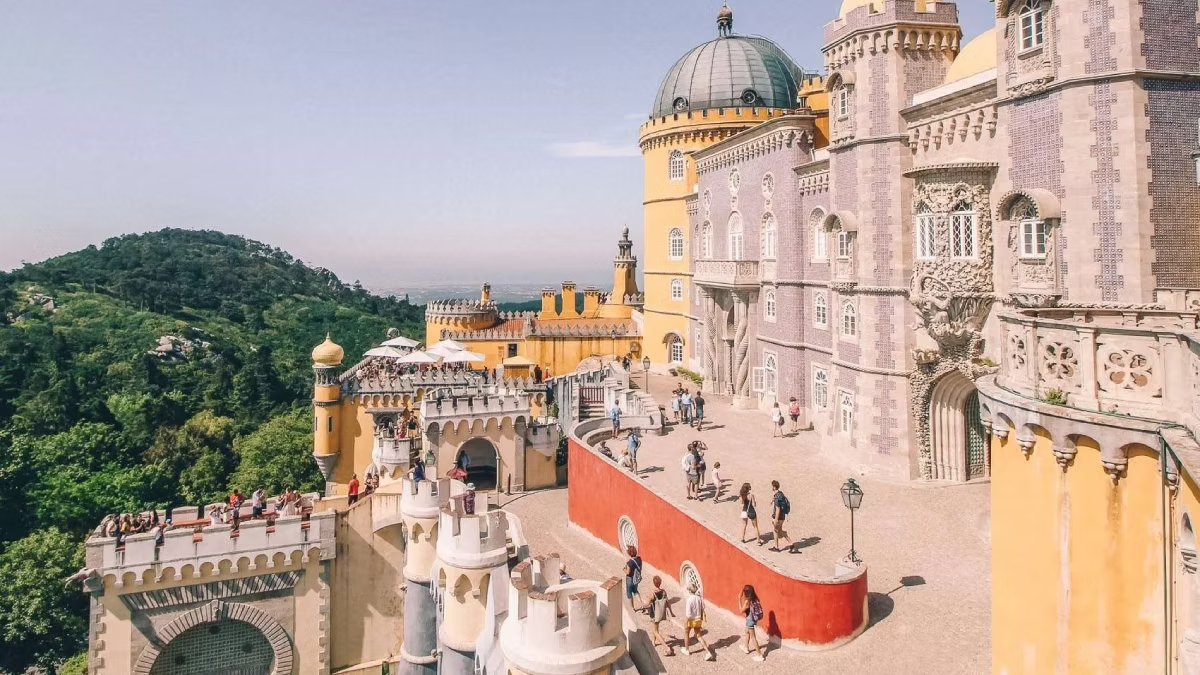
Pena Palace’s exterior is its real showstopper: the carved Triton portal at the entrance, the vivid red and yellow façades, the Queen’s Terrace and Warriors’ Terrace, a drawbridge and Neo-Manueline archways, and sweeping views over Sintra to the Atlantic on clear days. Both the park-only ticket and the Park + Palace ticket include full access to the terraces and exterior.
Most people picture Pena Palace before they even arrive — the jumble of red and yellow towers rising out of the misty Sintra hills is one of the most photographed sights in Portugal. What the pictures don’t always convey is how much there is to explore on the outside alone: carved portals, terraces at different levels, a working drawbridge and views that stretch to the coast.
This guide covers the exterior features worth slowing down for, in roughly the order you’ll meet them on a typical visit.
Why the Exterior Is the Real Highlight
Unlike the palace interior, which requires a timed slot on the Park + Palace ticket, the exterior and terraces are included on both the park-only ticket and the full ticket, with no time limit. Many visitors, and quite a few guidebooks, rate the outside of Pena as more memorable than the state rooms — the colour, the scale and the setting on a wooded peak are hard to match anywhere else in Portugal.
That’s a genuinely useful thing to know if you’re deciding which ticket to buy: if your priority is the look of the building and the views rather than the royal apartments, the cheaper park-only option covers everything described in this guide. Our park-only vs park + palace comparison breaks down exactly what each ticket includes.
The Triton Portal
The palace’s main entrance is guarded by the Triton portal, an elaborate carved archway built around a mythological triton figure that represents an allegory of the creation of the world. It’s one of the clearest examples of the palace’s Neo-Manueline style — the 19th-century revival of Portugal’s maritime Manueline decoration, full of ropes, shells and marine motifs — reimagined here on a suitably theatrical scale.
Take a moment at the portal before heading in or out; it’s easy to walk past quickly on a timed schedule, but the detail in the carving rewards a slower look, and it photographs well in the softer light of early morning or late afternoon.
The Red and Yellow Façades
Pena’s façades are painted in bold red and yellow, a colour scheme that has faded and been restored more than once since the palace was completed in the 1850s. The contrast between the two colours, applied to different wings and towers, is part of what makes the building read as a fantasy structure rather than a conventional royal residence — it was designed to be seen from a distance, rising above the tree line, and the colour does exactly that job.
The palace sits on the ruins of a 16th-century Hieronymite monastery, and King Ferdinand II’s rebuilding from around 1838 deliberately mixed Neo-Gothic, Neo-Moorish, Neo-Manueline and Neo-Renaissance elements into one eclectic Romantic composition. For the fuller story of how that came together, see our guide to Pena Palace’s history.
The Queen’s Terrace
The Queen’s Terrace is widely considered the best vantage point for taking in the palace’s architecture as a whole, with the towers, domes and painted walls visible together from a single spot. It’s also one of the more sheltered terraces, making it a good stop if you want a slower look without the crowds that build up around the main entrance during the middle of the day.
The Warriors’ Terrace
The Warriors’ Terrace takes its name from statues associated with mythological or historical warrior figures set along its length, and it offers a different angle on the palace and the surrounding park than the Queen’s Terrace. Together, the two terraces give you contrasting perspectives on the building — one closer to the architecture, one looking outward toward the grounds and the hills beyond.
The Drawbridge and Neo-Manueline Archways
A drawbridge, decorative rather than strictly functional today, marks one of the transitions between the palace’s fortress-like lower sections and its more ornamental upper levels. Elsewhere, Neo-Manueline archways — pointed, ornately carved openings echoing 16th-century Portuguese maritime architecture — link courtyards and terraces as you move around the exterior. These details are easy to miss if you’re focused on reaching your interior timed slot, so it’s worth building in a few extra minutes to look up as you pass through.
The Views Over Sintra and to the Atlantic
From the terraces and upper walkways, Pena Palace offers sweeping views over the town of Sintra, the nearby Moorish Castle ramparts, and — on clear days — as far as the Atlantic coast. Sintra’s misty microclimate means the view isn’t guaranteed every visit, so early morning on a clear day generally gives the best chance of an unobstructed panorama.
These views are one of the strongest arguments for visiting Pena regardless of whether you add the interior. If you want to get even higher for a wider panorama, the Cruz Alta viewpoint in the surrounding park climbs higher still. For tips on getting the best shots of the façades, terraces and views, see our photography guide.
A Quieter Way to See the Walls
If the main terraces feel busy, the Caminho de Ronda — a rampart walkway that circles part of the palace walls — offers a quieter route with its own views over the park and hills. It’s a good option if you’ve already covered the main terraces and want a different angle without doubling back through the crowds.
Frequently Asked Questions
Do I need the full ticket to see the terraces?
No. The exterior, terraces and grounds are included on both the park-only ticket and the Park + Palace ticket. Only the interior state rooms require the full ticket and a timed slot. If the exterior and views are your priority, the park-only option covers everything in this guide.
What is the Triton portal?
It’s the carved archway at the palace’s main entrance, built around a mythological triton figure representing an allegory of the creation of the world. It’s one of the best examples of the palace’s Neo-Manueline decorative style and a popular photo spot.
Why is Pena Palace painted red and yellow?
The bold colour scheme was part of King Ferdinand II’s original 19th-century design, intended to make the palace stand out dramatically against the wooded hillside. The colours have faded and been restored more than once over the decades, and today’s palette reflects the most recent restoration work.
Which terrace has the best views?
The Queen’s Terrace is generally considered the best spot for seeing the palace’s architecture as a whole, while the Warriors’ Terrace and the higher Cruz Alta viewpoint in the park offer wider panoramas over Sintra and, on clear days, to the Atlantic.
Can you see the Atlantic from Pena Palace?
On clear days, yes — the terraces and higher points in the park offer views that stretch as far as the coast. Sintra’s misty microclimate means this isn’t guaranteed on every visit, so mornings and clearer days generally give the best chance.
Is the exterior more impressive than the interior?
Opinions differ, but many visitors and guidebooks rate the exterior and terraces as Pena’s real highlight, thanks to the colour, scale and hilltop setting. The interior offers a different, more personal experience through the preserved state rooms and royal apartments.
How long should I spend on the terraces?
Give yourself at least 30–45 minutes to walk both the Queen’s and Warriors’ terraces and take in the Triton portal without rushing, more if you want to also explore the Caminho de Ronda or climb to the Cruz Alta viewpoint in the park.
Is the drawbridge still functional?
It’s largely decorative today rather than in working use, forming part of the transition between the palace’s lower, more fortress-like sections and its ornamental upper terraces. It’s one of several details that reinforce the palace’s romantic, storybook design.
