

Caminho de Ronda: Pena Palace’s secret path
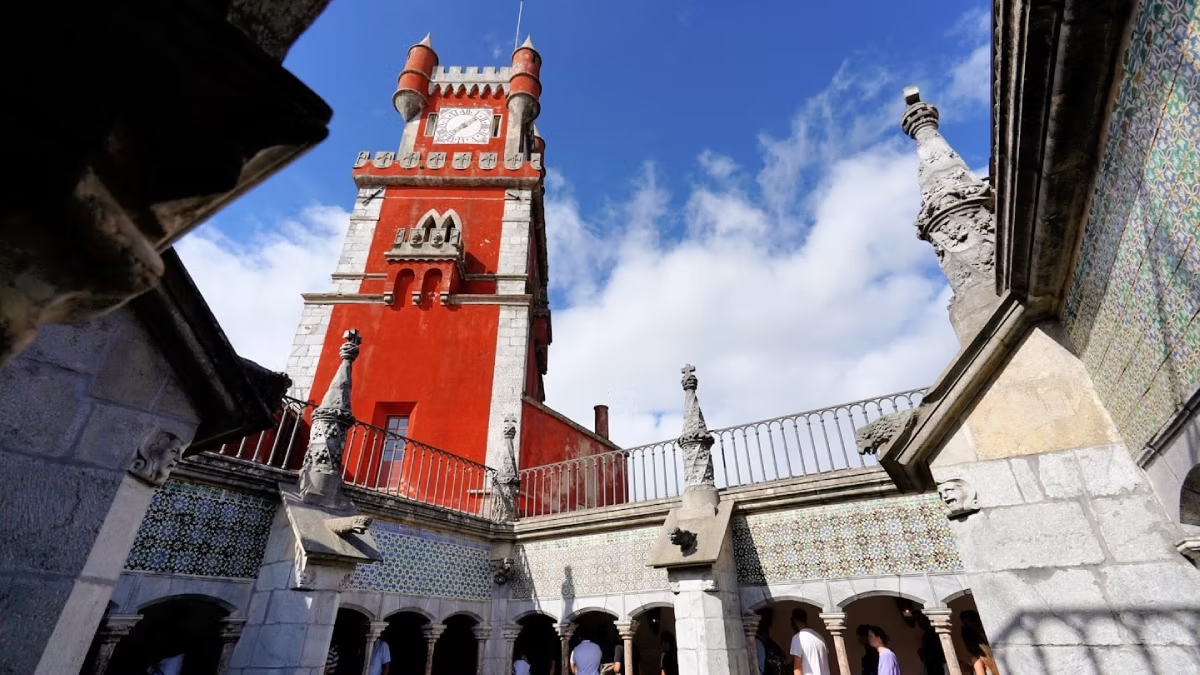
The Caminho de Ronda (“patrol path”) is a rampart walkway running around the outside of Pena Palace’s walls, giving close angles on the towers and façades, and views over the surrounding hills, that most visitors miss entirely. It’s far quieter than the main terraces because it isn’t heavily signposted and many people head straight from the entrance to the interior. Look for it along the outer walls beyond the Queen’s Terrace and the Warriors’ Terrace.
Pena Palace’s main terraces get busy fast — everyone who climbs up through the park ends up funnelled onto the same few viewpoints near the entrance. The Caminho de Ronda, the old patrol path that traces the outside of the palace’s ramparts, is a quieter alternative that most first-time visitors don’t know to look for. It rewards you with angles on the towers and walls you simply don’t get from the standard route.
This guide explains what the Caminho de Ronda actually is, where to find it as you move through the palace, what you’ll see along it, and why it’s worth the small detour.
What Is the Caminho de Ronda?
“Caminho de Ronda” translates roughly as “patrol path” or “rampart walk” — a walkway that runs along the outer defensive walls of a fortified building, in the tradition of the rounds a guard would once have walked. At Pena, it takes the form of a narrow route tracing sections of the palace’s exterior walls, connecting parts of the building that aren’t linked by the main visitor flow through the state rooms and the principal terraces.
Because Pena Palace was built in stages over the mid-19th century, wrapping a new Romantic palace around the ruins of an older monastery, its walls have an unusually irregular, layered geometry — sudden turrets, connecting bridges, walkways that double back on themselves. The Caminho de Ronda is where that geometry is most visible, since you’re walking directly alongside the stonework rather than viewing it from a fixed terrace.
Where to Find It During Your Visit
The Caminho de Ronda branches off from the area around the Queen’s Terrace and the Warriors’ Terrace, on the palace’s outer walls beyond the main visitor route. It isn’t as clearly signposted as the terraces themselves, so it’s easy to walk past without noticing. Keep an eye out for narrower stone walkways leading off the main terraces as you explore the exterior of the building.
Most visitors follow a fairly linear path: through the Triton portal, around the main terraces, into the state rooms, and back out. The Caminho de Ronda sits slightly off that line, so it takes a small amount of deliberate exploring to find. If you’re not sure where it starts, palace staff can usually point you towards it — it’s a legitimate, open part of the visitor route, just a quieter one.
Because it’s outdoors and separate from the timed interior slot, you can walk it either before or after your palace-interior entry, whichever suits your schedule better. Many visitors find it works well as a calmer wind-down after the more crowded state rooms.
What You’ll See Along the Path
The main appeal of the Caminho de Ronda is perspective. Rather than looking at Pena Palace’s towers and tiled walls from a fixed viewing point, as you would from the main terraces, you walk directly alongside them, close enough to see individual details in the stonework and tilework that are lost from further away. The path also offers glimpses out over the surrounding hills and forest between sections of wall, framed differently to the wider views from the Queen’s and Warriors’ terraces.
It’s a genuinely good spot for photographers looking for something other than the standard wide shots everyone else takes. The tighter, angled views of the towers and battlements along the walk photograph well, especially in the softer light of early morning or late afternoon.
Why It’s a Lesser-Known Highlight
The Caminho de Ronda stays quiet mainly because it isn’t as prominently marked as the palace’s main terraces, and because visitors on a timed interior slot often feel pressed to move straight through the building rather than explore side routes. That makes it one of the few spots at Pena where you can find a moment of relative calm, even during the busiest parts of the day.
Pena Palace is one of Sintra’s most visited sites, and the crush around the main terraces and entrance can be considerable in peak season. The Caminho de Ronda doesn’t appear in the highlight reel of most guidebooks or tour itineraries, which is exactly why it stays calmer. If crowd levels are a concern for your visit, our guide to avoiding crowds at Pena Palace covers the timing strategies that pair well with seeking out quieter corners like this one.
Frequently Asked Questions
What does “Caminho de Ronda” mean?
It translates as “patrol path” or “rampart walk,” referring to the route a guard would once have walked along a fortification’s outer walls. At Pena Palace, it’s the walkway tracing sections of the building’s exterior ramparts, separate from the main terraces and interior route.
Is the Caminho de Ronda signposted?
Not as clearly as the main terraces. It branches off near the Queen’s Terrace and Warriors’ Terrace, but it’s easy to miss if you’re not specifically looking for it. Palace staff can point you in the right direction if you ask.
Is it included in the standard ticket?
Yes. The Caminho de Ronda is part of the palace exterior, covered by any ticket that includes palace access, alongside the terraces and grounds. There’s no separate charge or booking for it.
Do I need the palace-interior ticket to walk it?
No — it’s an outdoor route along the exterior walls, so it doesn’t require your timed interior slot. You can walk it before or after visiting the state rooms, fitting it around your booked entry time.
Is the Caminho de Ronda accessible for visitors with mobility difficulties?
It involves uneven stone paths and some narrow sections, so it’s less accessible than the main terraces. If mobility is a concern, check our accessibility guide before planning to include it, and consider asking staff about the easiest sections to reach.
How long does the Caminho de Ronda take to walk?
Allow 15–20 minutes to walk it at an unhurried pace, more if you stop often for photos. It’s a short addition to a palace visit rather than a major detour, easily fitted into a couple of hours at Pena.
Is it good for photography?
Yes, particularly for closer, more angled shots of the towers and stonework than you get from the main terraces. Early morning or late afternoon light works best, and the relative quiet makes it easier to shoot without other visitors in frame — see our photography guide for more vantage points around the site.
Is the Caminho de Ronda busy?
Generally no — it’s one of the quieter parts of the palace precisely because it isn’t as prominent in most visitor itineraries. Even during peak hours, when the main terraces are crowded, the patrol path usually offers some breathing room.
