

Chalet of the Countess of Edla: Sintra’s hidden gem
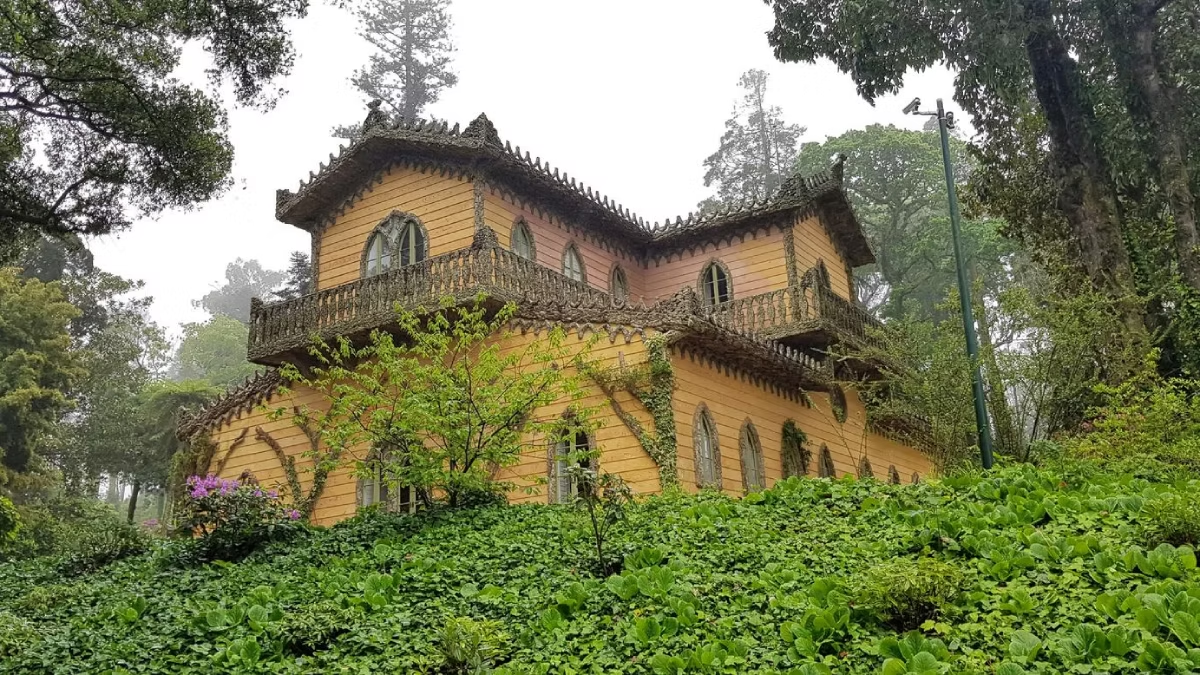
The Chalet of the Countess of Edla is an Alpine-style retreat that King Ferdinand II built in the 1860s–70s with his second wife, the opera singer Elise Hensler, Countess of Edla, tucked into a quieter corner of Pena Park. Badly damaged by fire in 1999, it was restored and reopened, and today it’s one of Sintra’s least crowded highlights, decorated with distinctive cork and painted finishes.
Most visitors to Pena Park never make it to the Chalet of the Countess of Edla, and that’s part of its appeal. It sits a little apart from the main route between the park gate and the palace, which means that even in high season it tends to feel calm — a small, personal building with a genuinely unusual love story behind it, rather than another stop on a busy circuit.
This guide covers who built the chalet and why, its distinctive decoration, the 1999 fire and restoration, and how to fit it into a visit to Pena Park.
A Retreat Built for a Second Marriage
King Ferdinand II built the chalet in the 1860s–70s with his second wife, Elise Hensler, an American-raised opera singer he later married and had made Countess of Edla. Unlike the main palace, built as a grand royal residence, the chalet was conceived as a private retreat for the couple, reflecting their shared interest in gardens and the arts on a far more intimate scale.
Ferdinand II had already completed Pena Palace decades earlier for his first wife, Queen Maria II, and their family. After her death, his second marriage to Hensler — a match that raised eyebrows at the Portuguese court given her background as a performer — produced this much smaller, more personal building nearby. Where the palace was designed to be seen from across the Sintra hills, the chalet was designed to be lived in quietly, away from the crowds it now, somewhat ironically, still manages to avoid. For more on Ferdinand II’s broader building projects at Pena, see our guide to the palace’s history.
Alpine Style, Portuguese Setting
The chalet takes its architectural cues from the Alpine chalets fashionable across mid-19th-century Europe — steep gabled roofs, timber detailing and a rustic, cottage-like silhouette that stands in deliberate contrast to Pena Palace’s much grander, more theatrical towers. Set among the exotic planting Ferdinand II and Hensler cultivated around it, including dedicated fern gardens, the building reads as a genuinely different world from the main palace just a short walk away.
Cork and Painted Decoration
One of the chalet’s most distinctive features is its decorative use of cork, applied both inside and out to create textured surfaces and finishes, alongside painted decoration that echoes some of the trompe-l’œil techniques used at the main palace. Cork was a material with strong regional associations in Portugal, and its use here — worked into ornamental rather than purely functional forms — is part of what makes the chalet feel distinct from anything else in Pena Park.
Combined with the surrounding gardens, the effect is closer to a rustic artist’s retreat than a royal building, which is very much how Ferdinand II and Hensler appear to have intended it.
The 1999 Fire and Restoration
The chalet suffered severe fire damage in 1999, a loss that threatened much of its original decorative fabric. Restoration work followed under Parques de Sintra, the organisation that manages the wider Pena estate, and the chalet reopened to the public some years later. The restoration project was later recognised with a European heritage award, reflecting the scale and care involved in bringing the building back from serious fire damage.
If you visit today, much of what you see reflects that careful restoration rather than untouched 19th-century original fabric — worth knowing if you’re interested in the building’s authenticity as well as its appearance.
The Surrounding Gardens
The chalet sits within its own dedicated garden areas, including fern plantings and quieter paths distinct from the main routes through Pena Park. These grounds were shaped by the same botanical enthusiasm that filled the wider park with exotic species, on a more intimate, personal scale reflecting the couple’s own tastes rather than a formal royal design brief.
Why It’s a Quieter Highlight
Because the chalet sits off the direct path between the park entrance and the palace, many visitors on a tight schedule skip it entirely, especially those focused on making a timed palace interior slot. That’s exactly what makes it worth the detour if you have the time: a genuinely quiet, personal corner of an estate that otherwise draws large numbers of visitors, with none of the queuing that can build up around the terraces and main palace entrance.
How to Include It in a Park Visit
The chalet requires a walk beyond the main palace route, so it’s best suited to visitors with at least half a day at Pena rather than a rushed couple of hours. If you’re planning your route through the park, build the chalet in as a deliberate detour rather than assuming you’ll pass it on the way — it sits apart from the direct path most visitors take. Combining it with the Cruz Alta viewpoint, which also lies off the main route, makes for a fuller half-day exploring the quieter parts of the grounds. It’s included on both the park-only ticket and the full Park + Palace ticket, so there’s no separate charge to see it.
Frequently Asked Questions
Who was the Countess of Edla?
Elise Hensler was an opera singer, raised in the United States, who became King Ferdinand II’s second wife after the death of Queen Maria II. Ferdinand had her granted the title Countess of Edla, and the couple built this chalet together as a private retreat within Pena Park.
When was the chalet built?
Ferdinand II and the Countess of Edla built the chalet in the 1860s–70s, decades after the main Pena Palace was completed in the 1850s. It was conceived as a much smaller, more personal retreat rather than a grand royal residence.
What happened to the chalet in 1999?
A serious fire severely damaged the chalet in 1999, threatening much of its original decoration. Parques de Sintra, which manages the wider Pena estate, carried out an extensive restoration, and the building later reopened to the public.
Is the chalet included in the standard Pena Palace ticket?
Yes — the chalet is included on both the park-only ticket and the full Park + Palace ticket, with no separate admission fee. You do need to walk a little further than the main palace route to reach it.
Why is the chalet less crowded than the palace?
It sits off the direct path between the park entrance and the palace, so visitors focused on reaching a timed interior slot or the main terraces often skip it. That makes it one of the quietest highlights in the whole Pena estate.
What makes the chalet’s decoration distinctive?
It’s known for its decorative use of cork, applied to create textured surfaces inside and out, alongside painted finishes echoing techniques used in the main palace. Combined with its Alpine-style architecture, it looks and feels quite different from the rest of Pena Palace.
How long should I allow to visit the chalet?
Allow at least 30–45 minutes for the chalet and its gardens, plus the extra walking time to reach it from the main palace route. Pairing it with the Cruz Alta viewpoint makes a fuller half-day itinerary through the quieter parts of the park.
Is the chalet suitable for a quick visit to Pena Palace?
Not really — if you only have a couple of hours, you’re better prioritising the palace interior and the main terraces described in our terraces and exterior guide. The chalet suits visitors with a fuller day who want to see beyond the main sights.
