

Pena Park: the full guide to the palace grounds
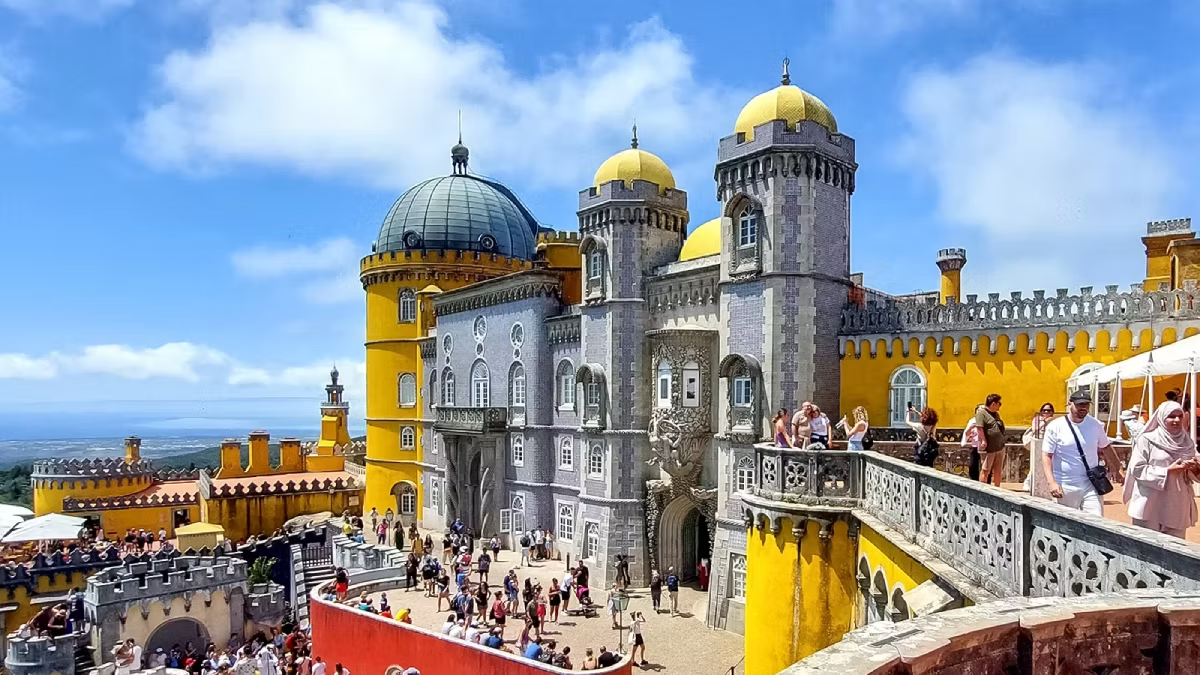
Pena Park is roughly 85 hectares of exotic woodland that King Ferdinand II laid out around his palace, with highlights including the Valley of the Lakes, the Fountain of the Small Birds, the Queen’s Fern Garden, the Warriors’ Terrace and the Chalet of the Countess of Edla. A separate park-only ticket, cheaper than the full Park + Palace option, covers all of it without the palace interior.
Pena Palace tends to get top billing, but the park around it is a destination in its own right — big enough that many visitors underestimate how much time it deserves. Ferdinand II, who built the palace, was as passionate about botany as he was about architecture, and he used the grounds to plant trees and shrubs collected from as far afield as North America, Asia and Australia, threaded together with winding paths, lakes and follies.
This guide covers the park’s main features, suggests a couple of routes depending on how much time you have, and explains what the park-only ticket gets you.
Pena Park at a Glance
| Feature | Detail |
|---|---|
| Size | Around 85 hectares |
| Created by | King Ferdinand II, from the 1840s |
| Highlights | Valley of the Lakes, Fountain of the Small Birds, Queen’s Fern Garden, Warriors’ Terrace, Chalet of the Countess of Edla, Cruz Alta |
| Cruz Alta elevation | Around 528 metres — the highest point of the Sintra hills |
| Walk from park gate to palace | 20–30 minutes uphill, or a paid shuttle |
An Exotic Garden Built by a Romantic King
Ferdinand II laid out Pena Park from the 1840s as a romantic, informal landscape rather than a formal garden, planting exotic species from around the world alongside native Portuguese trees. The result is roughly 85 hectares of winding paths, dense woodland and hidden clearings, designed to reveal viewpoints and follies gradually as you walk rather than all at once.
That “reveal as you walk” design is worth keeping in mind: Pena Park isn’t built for a quick loop past the highlights. It rewards wandering, and its layout is part of why the walk from the entrance gate up to the palace takes as long as it does. For the fuller story of how Ferdinand II built both the palace and the park, see our guide to Pena Palace’s history.
The Valley of the Lakes
The Valley of the Lakes is a low-lying cluster of small ornamental lakes and ponds tucked into the park’s woodland, a shadier, cooler contrast to the terraces and open viewpoints higher up near the palace. It’s one of the park’s quieter corners and a good spot to break up a longer walk, particularly on a hot day.
The Fountain of the Small Birds
Nearby, the Fountain of the Small Birds is a decorative fountain feature typical of the whimsical follies Ferdinand II scattered through the grounds. Like much of the park, it’s easy to walk past if you’re focused purely on reaching the palace, so it’s worth building in time to explore the paths just off the main route.
The Queen’s Fern Garden
The Queen’s Fern Garden is a shaded, densely planted area showcasing fern species, reflecting the 19th-century enthusiasm for exotic botany that shaped much of the park’s original planting scheme. Its cooler, more enclosed feel makes it a pleasant stop in the middle of a walk, especially in the warmer months.
The Warriors’ Terrace
The Warriors’ Terrace, described in more detail in our guide to the terraces and exterior, sits closer to the palace itself and offers views back across the park and toward Sintra. It’s a natural point to pause on the climb up, whether you’re heading to a palace interior slot or simply exploring the grounds.
The Chalet of the Countess of Edla
Tucked into a separate, quieter part of the park, the Chalet of the Countess of Edla is an Alpine-style retreat that Ferdinand II built in the 1860s–70s with his second wife, Elise Hensler. It’s a short additional walk from the main palace route and often skipped by visitors on a tight schedule, which makes it one of the park’s better-value stops if you have the time. Our dedicated guide to the Chalet of the Countess of Edla covers its history and how to fit it into your visit.
The Cruz Alta Viewpoint
At around 528 metres, the Cruz Alta (High Cross) is the highest point of the Sintra hills and the park’s most rewarding viewpoint, with panoramic views that stretch over the palace, the Moorish Castle and, on clear days, the Atlantic coast. It’s a further, steeper walk beyond the palace itself, so it suits visitors with a bit of extra time and energy. Full route advice is in our guide to the Cruz Alta viewpoint.
Suggested Routes and How Long They Take
If you have limited time, focus on the direct route from the park entrance up to the palace, taking in the Warriors’ Terrace and perhaps a short detour to the Valley of the Lakes — allow around 45–60 minutes each way, on top of your time inside the palace and on the terraces. With a full day, add the Chalet of the Countess of Edla and the climb to Cruz Alta, which together can add two or more hours depending on your pace and how many stops you make.
For a quieter alternative to the main paths, the Caminho de Ronda rampart walkway offers a different perspective on the palace walls without joining the busiest routes through the park. Whichever route you choose, wear comfortable shoes — the paths are uneven in places and the climb is steady rather than flat throughout.
The Park-Only Ticket
If your priority is the grounds rather than the palace interior, the park-only ticket covers everything described in this guide — the lakes, gardens, terraces, Chalet of the Countess of Edla and Cruz Alta — at a lower price than the full Park + Palace ticket. It’s a sensible choice if you’re short on time, travelling with young children who may tire on the longer walks, or if interior slots have sold out for your date.
Frequently Asked Questions
How big is Pena Park?
Pena Park covers roughly 85 hectares of woodland and gardens around the palace, laid out by King Ferdinand II from the 1840s onward. It’s considerably larger than most visitors expect, which is part of why a rushed visit tends to miss some of its best corners.
Do I need a separate ticket for the park?
The park is included on both the park-only ticket and the Park + Palace ticket. If you don’t want the palace interior, the park-only option is cheaper and covers the full grounds, including the Chalet of the Countess of Edla.
How long does it take to walk through Pena Park?
Allow 45–60 minutes each way for the direct route between the park gate and the palace. A fuller exploration that includes the Chalet of the Countess of Edla and the Cruz Alta viewpoint can take half a day or more, depending on your pace.
What is the highest point in Pena Park?
The Cruz Alta (High Cross), at around 528 metres, is the highest point of the Sintra hills and offers the park’s widest panoramic views. It’s a further walk beyond the palace itself, so it suits visitors with extra time.
Can I skip the walk with a shuttle?
Yes — a paid shuttle bus runs between the park gate and the palace for visitors who’d rather not make the 20–30 minute uphill walk. It doesn’t cover the further walk out to the Chalet of the Countess of Edla or Cruz Alta, which remain on foot.
Is the park suitable for children?
Generally yes — the lakes, gardens and colourful palace views appeal to children, and under-6s enter free. That said, the hills and long walks can tire small legs, and strollers struggle on some of the steeper, uneven paths.
What’s the difference between the park and the Chalet of the Countess of Edla?
The Chalet is a specific historic building within the park, tucked into a separate, quieter section rather than on the main route to the palace. Our dedicated guide explains how to include it in a park visit.
Is Pena Park worth visiting without the palace interior?
Yes, for many visitors — the park alone includes several of Pena’s signature sights, from the terraces and views to the Chalet of the Countess of Edla, and the exterior of the palace itself is visible throughout. See our guide to the terraces and exterior for what you’ll see of the palace without going inside.
